


What Natural Remedies For Heavy Legs?
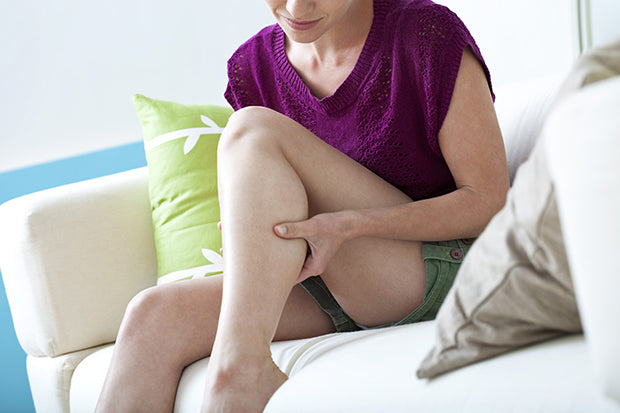
Although the hot season brings its share of pleasures, certain health conditions can be exacerbated by the heat. This is particularly the case for so-called restless heavy legs syndrome. To counter the inconveniences of this condition, many will try to turn to natural alternatives. La Boite à Grains offers you this detailed advice sheet to help you enjoy summer fully and without inconvenience.
S.O.S. leg care: Understanding venous insufficiency
Venous insufficiency is a condition that affects the leg veins. This problem affects nearly 50% of the adult population of industrialized countries, with a notable predominance among women. Venous insufficiency results from poor functioning of the subcutaneous veins (superficial veins located directly under the skin) and the valves they contain.
The valves located inside these veins and along their walls generally ensure effective blood return, even against gravity. When the valves fail to return blood efficiently, the accumulation of blood in the lower limbs produces various symptoms associated with heavy, restless legs including: 1
- Tingling in the legs
- Swelling of the feet and ankles
- A feeling of heaviness
- Pain and/or numbness
- Muscle cramps
- The formation of varicose veins
- Nocturnal awakenings associated with these symptoms above
Several factors contribute to venous insufficiency including heredity, advanced age, being overweight, lack of muscle tone, sedentary lifestyle, pregnancy, smoking and adopting static positions.
S.O.S leg care: Plants that provide relief
Annoying and uncomfortable, restless legs can be relieved by the use of so-called venotonic plants which effectively reduce the symptoms of venous insufficiency.
This is the case of the red vine and of horse chestnut.
These two plants are clinically proven for their benefits on venous insufficiency since they reduce the feeling of heaviness, tingling in the legs, edema and pain associated with this condition.
In the case of the red vine (vitis vinifera), the benefits are particularly due to the polyphenols contained in grapes. Indeed, clinical studies have demonstrated that resveratrol, oligo-proanthocyanidins (OPC) and quercetin relieve the symptoms of varicose veins and venous insufficiency. 2,3,4
As for the horse chestnut (Aesculus hippocastanum), numerous clinical studies and two meta-analyses have demonstrated that the plant is effective and safe for the treatment of venous insufficiency. Recognized by the German Commission E, the World Health Organization (WHO) and the European Scientific Cooperative on Phytotherapy (ESCOP) for its venotonic properties, horse chestnut has become a favorite remedy used not only by natural health therapists but also by the pharmaceutical community. 5,6,7
However, there is no need to turn to pharmaceutical options, these are synthesized from red vine and horse chestnut and are derivatives of whole plants. Instead, opt for standardized extracts containing an NPN (number of natural product) like Léo Désilets products certified without GMOs or pesticides.
S.O.S. leg care: Healthy lifestyle and restless legs
In addition to relief through plants, several lifestyle recommendations can be implemented to alleviate symptoms due to venous insufficiency and varicose veins.
In particular, it is necessary:
- Aim to achieve a healthy weight. Excess weight puts additional pressure on the veins, which makes blood return more difficult and exacerbates symptoms;
- Practice physical activity regularly. As the veins of the lower limbs are compressed by the leg muscles, physical activity and movement promote the proper functioning of the valves located inside the veins;
- Avoid adopting prolonged standing, particularly any static position, which increases the pressure exerted on the veins by 10 times. If necessary, swing the weight from one leg to the other or take steps on the spot, which activates muscle contractions and promotes blood return;
- Listen to the body's signals and allow rest periods as needed. Allowing yourself moments of break to raise your legs for a few minutes is not a sign of laziness but of time well invested;
- Avoid exposure to heat when possible. Heat promotes dilation of the veins, which harms blood return. In summer, you should try to keep your legs cool by seeking shade, water or air conditioning;
- Keep your legs extended and uncrossed when in a seated position, which avoids constriction of the veins;
- Consume berries and vitamin C on a regular basis to maintain the integrity of vein walls;
- Wear support/compression stockings as recommended by a health professional capable of issuing a recommendation to this effect;
Don’t let venous insufficiency ruin your summer! For maximum comfort, adopt the advice given in this article by using the red vine, the horse chestnut and implementing the lifestyle recommendations listed.
Have a good summer!
About the author
Naturopaths from La Boite à Grains
Team of qualified and certified naturopaths (ND) in Gatineau in Outaouais.
Original article written by Véronique Cousineau, Naturopath
Sources
- Michael T. Murray, N.D., Joseph Pizzorno, N.D. The encyclopedia of natural medicine. Third Edition. Atria Paperback. New York, NY 2012.
- Henriet JP. Exemplary study for a phlebotropic substance, the EIVE Study. Fairfield, Conn: Primary Source; not dated. Study mentioned and summarized in: Natural Standard (Ed). Foods, Herbs & Supplements - Grape seed (Vitis vinifera, Vitis coignetiae), Nature Medicine Quality Standard.
- Thebaut JF, Thebaut P, Vin F. Study of Endotelon W in functional manifestations of peripheral venous insufficiency. Gas Med. 92:96-100. 1985 Study mentioned and summarized in: Natural Standard (Ed). Foods, Herbs & Supplements - Grape seed (Vitis vinifera, Vitis coignetiae), Nature Medicine Quality Standard.
- Delacroix P. Double-blind study of Endotelon W in chronic venous insufficiency. The Revue de Médecine. 27-28: 1793- 1802. 1981. Study mentioned and summarized in: Natural Standard (Ed). Foods, Herbs & Supplements - Grape seed (Vitis vinifera, Vitis coignetiae).
- Pittler MH, Ernst E. Horse chestnut seed extract for chronic venous insufficiency. Cochrane Database of Systematic Reviews. Issue 11. Art. No: CD003230. 2012
- Suter A, Bommer S, Rechner J. Treatment of patients with venous insufficiency with fresh plant horse chestnut seed extract: a review of 5 clinical studies. Adv ther. 23(1):179-90. 2006
- Siebert U, Brach M, Sroczynski G, Berla K. Efficacy, routine effectiveness, and safety of horse chestnut seed extract in the treatment of chronic venous insufficiency. A meta-analysis of randomized controlled trials and large observational studies. Int Angiol. 21(4):305-15. 2002
Products recommended in this article

Red Vine
- 22.99$
- 22.99$
- Price per unit
- by
-
60 vegetarian capsules

Horse chestnut
- 28.99$
- 28.99$
- Price per unit
- by
-
90 capsules