


Quinoa: what is it and how to cook it?
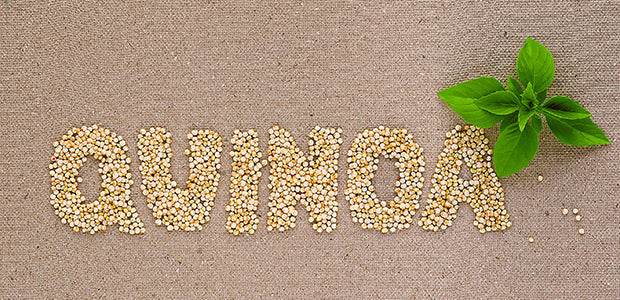
Quinoa.
This is a word that we have heard everywhere for several years. Appearing in recipe books, on restaurant menus and in newspapers, quinoa seems to have carved out a place among us.
Let's get to know quinoa better: a superfood which, in 2013, had an international year in its name.
What is quinoa?
Quinoa is a seed from the family of amarantaceae harvested in South America for over 7,000 years. The Incas gave the name mother of all grains to this nutritious food that they considered sacred. 1
According to its botanical class, quinoa is not a grain since it does not come from a cereal. More akin to spinach seeds and beets, quinoa has stood the test of time because of its nutritional value, its versatility and its good nutty taste.1,2
Although quinoa has experienced global growth in recent years, its main production still takes place in its countries of origin: Bolivia and Peru. 1
Why do we hear a lot about quinoa?
Quinoa was, for millennia, unknown to North American people. In recent years, however, quinoa has been all the rage in our kitchens.
Quinoa has particularly caught our attention since two food phenomena emerged: the interest in veganism and gluten-free.
Indeed, quinoa is a seed that brings a lot of versatility to the vegan diet. Cooked like a grain, quinoa is one of the rare plant foods to provide a complete protein source. 3
Since awareness of gluten-free increased, more than 10 million Canadians (or one in three) are looking for gluten-free products in stores.4 Quinoa offers these consumers a healthy and nutritious substitute.
Are there different kinds of quinoa?
There are over 3,000 kinds of quinoa.2
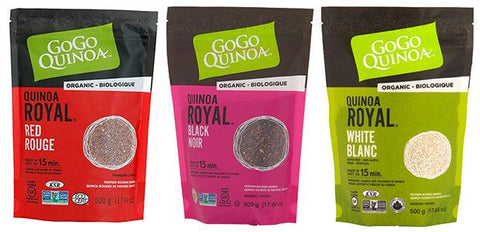
However, the most popular are quinoa white, red and black. You can also find mixtures whose red and white or the tricolor. White quinoa is the most marketed as it has a slightly sweeter taste than its counterparts.
Quinoa exists in its whole form, small flattened seeds with a caviar texture whose appearance is reminiscent of millet, but also in flakes, in flour or blown.
Is quinoa nutritious?
Quinoa is a much more nutritious alternative to its fellow grains including wheat and brown rice.
1 cup cooked quinoa offers 5:
- 8 grams of complete protein
- 5 grams of fiber
- A significant amount of manganese, magnesium, phosphorus, folate, copper, zinc and iron
Quinoa is also rich in phytonutrients and antioxidants, compounds with antiviral, anticancer and antidepressant effects. 6

What are the health benefits of quinoa? ?
Quinoa has a low glycemic index. In other words, it does not disrupt blood sugar balance and can fight against diabetes and obesity. 9
Thanks to its interesting nutritional profile, quinoa improves the health of people following a gluten-free diet. Indeed, products marketed as gluten-free are often highly processed and depleted of nutrients. On the other hand, quinoa is nutritious and contributes to better blood sugar levels and lower triglycerides. 10
With its fiber and protein content, quinoa is a good ally for weight loss.
Additionally, this superfood is rich in antioxidants, anti-aging and anti-cancer compounds. 11
How to eat quinoa?
Quinoa is a very versatile seed.
At breakfast, we prepare it as gruel with flakes breakfast or by cooking the whole seeds in a large quantity of liquid to which fruits, seeds, nuts and syrup are added.
As a snack, quinoa can be prepared in muffins, added to granola bars or even to these crispy chocolate squares.
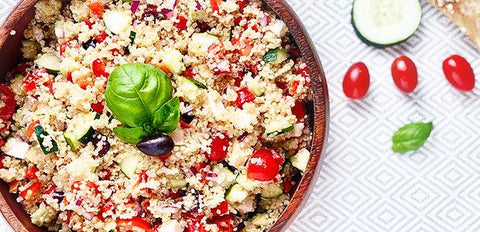
For the main meal, it is possible to serve quinoa to replace rice as a side dish, in salad, but also in sushi. This quinoa shepherd's pie and our greek salad with quinoa are other examples of usage. For even more versatility, the company GoGo Quinoa offers you quinoa-based pasta. Try it rifle, spaghetti and macaroni.
For a sugar craving, you can prepare a quinoa crisp, a chocolate cake, or snack on these double chocolate quinoa cookies.
How to cook quinoa?
When you prepare quinoa yourself, most of the time you use its whole form.
The seeds should be rinsed vigorously to remove saponin, a bitter compound found in the quinoa husk that inhibits the absorption of certain minerals and can cause digestive discomfort. Some will also soak quinoa to improve its digestibility. 7
Once rinsed and/or soaked, the quinoa is cooked in a quantity of 1 and a half times its volume. It cooks quickly: just 15 minutes and the quinoa is cooked, soft and full of water.
Who can eat quinoa?
Quinoa is accessible to everyone. As it is vegan and gluten-free, it is suitable for most alternative diets. Only fans of paleo and ketogenic diets will choose to avoid it.
However, some people may experience allergic symptoms. Generally, this is a reaction following poor preparation.
The saponin present in the husk of quinoa can be allergenic in certain people and cause acute digestive discomfort, breathing difficulties or an attack of hives. This is why quinoa should always be rinsed vigorously before cooking. 8
Now that you are quinoa experts, enjoy the products GoGo Quinoa to discover a range of products based on this superfood.
Go Quinoa!
About the author
Naturopaths from La Boite à Grains
Team of qualified and certified naturopaths (ND) in Gatineau in Outaouais.
Original article written by Véronique Cousineau, Naturopath
Sources
1: “The Global Expansion of Quinoa: Trends and Limits.” Bazile, Didier, Sven-Erik Jacobsen, and Alexis Verniau. Frontiers in Plant Science 7 (2016): 622. PMC. Web. September 10, 2018.
2: Nutrition facts and functional potential of quinoa (Chenopodium quinoa willd.), an ancient Andean grain: a review. Antonio Vega-Gálvez, Margarita Miranda, Judith Vergara, Elsa Uribe, Luis Puente, Enrique A. Martínez J Sci Food Agric. 2010 Dec; 90(15): 2541–2547.
3: Nutritional value. Secretariat of the International Year of Quinoa. Food and Agriculture Organization of the United Nations. 2013.
4: Consumers of gluten-free products. “Gluten-free” claims on the market. Agriculture and Agri-Food Canada.
5: Quinoa, cooked. Self-nutrition DATA.
6: Total antioxidant capacity and content of flavonoids and other phenolic compounds in canihua (Chenopodium pallidicaule): an Andean pseudocereal. J. Mauricio Peñarrieta, J. Antonio Alvarado, Björn Akesson, Björn Bergenståhl Mol Nutr Food Res. 2008 Jun; 52(6): 708–717.
7: Quinoa – a Review. Michala JANCUROVÁ, Lucia MINAROVIČOVÁ and Alexander DANDÁR. Department of Food Science and Technology, Faculty of Chemical and Food Technology, Slovak University of Technology. Flight. 27, 2009, No. 2: 71–79.
8: Am I allergic to saponin? Medical News Daily. Rachel Nall, RN, BSN, CCRN. Reviewed by Elaine K. Luo, MD. June 6, 2018
9: Glycemic index: overview of implications in health and disease. David J. A. Jenkins, Cyril W. C. Kendall, Livia S. A. Augustin, Silvia Franceschi, Maryam Hamidi, Augustine Marchie, Alexandra L. Jenkins, Mette Axelsen. Am J Clin Nutr. 2002 Jul; 76(1)
10: In vitro starch digestibility and in vivo glucose response of gluten-free foods and their gluten counterparts. Cristiana Berti, Patrizia Riso, Lucilla D. Monti, Marisa Porrini. Eur J Nutr. 2004 Aug; 43(4): 198–204.
11: Evaluation of indigenous grains from the Peruvian Andean region for antidiabetes and antihypertension potential using in vitro methods. Lena Galvez Ranilla, Emmanouil Apostolidis, Maria Ines Genovese, Franco Maria Lajolo, Kalidas Shetty. Journal of Med Food. 2009 Aug; 12(4): 704–713.