


Sea water and adaptogenic plants, stress and anxiety (A solution)

We live in a time and in a society where “doing” is largely valued over “being”. We could say that it is our “modus operandi”.3, 4
Between 0 and 10, where is your level of stress, if we had to evaluate it? In this exercise, it is beneficial to respond as spontaneously as possible.3, 4, 5
In order to stay on course with life, we often minimize this impact. This is why the number is often not representative of real stress, and this is why most people consult mental health resources.3, 4, 5
What are the sources of stress?
In your answer, you can consider going back to school, the death of a loved one, workload, health problems, conflicts, too short days, problems with sleep, poor diet, change of season, etc.3, 4, 5
When conflict persists, whatever the source, it drains our precious energy.1, 2, 3, 4, 5
The effect of anxiety can be negative, but there are a few solutions that could help!
Anxiety and the body's reactions
Our body has a perfect way of reacting to stress. It releases this excess discomfort through the secretion of hormones. It was Hans Selye, doctor, pioneer of studies on stress, who defined this reaction as being "General Adaptation Syndrome".1, 5
According to Hans Selye, the reactions that define stress are in 3 phases:
- Phase 1: State of alert → the body prepares for fight or flight
- Phase 2: Resistance → the situation persists
- Phase 3: Exhaustion → the situation continues and intensifies1, 5, 13
The perception of anxiety
Did you know? The body does not see the difference between good and bad stress. The only thing that distinguishes the two is our perception of the experience which will affect our final state of mind. For example, optimists will be more likely not to let their problems get them down.1, 5
In the scheme of things, chronic unresolved stress leads to fatigue which can lead to exhaustion. Today, the cause of chronic stress has multiple circumstantial reasons.1, 5
The role of the adrenal glands
When there is stress, adrenaline, this survival hormone, sets in motion a series of physiological changes: the heart rate increases, breathing accelerates, blood pressure rises, digestion largely fades, metabolism accelerates and the pancreas, whipped by adrenaline, releases its glucagon which in turn forces the liver to release its glycogen reserve to restore blood sugar.
The brain in a state of panic caused by hypoglycemia too often causes the body to produce excess adrenaline which remains present in the blood permanently and which causes side effects such as sweating, anxiety, tremors, dizziness, etc.
Prolonged periods of stress lead to a chronic elevation of cortisol (stress hormone) levels produced by the adrenal glands. Research now links cortisol to bone loss, chronic fatigue, exhaustion, fat accumulation, infertility and memory loss. Additionally, the workload of the adrenals increases during menopause, as these glands are a primary source of sex hormones, including estrogen.1, 2, 3, 4, 5, 13
Some life advice
Here are some tips for recovering from a period of stress:
- Learn to rest
- Do breathing exercises
- Avoid overwork
- Exercise without excess
- Reflect on its relationship with time
- Stay well hydrated while exercising
- Eat in a balanced way
- Etc.1, 5, 9
The benefits of sea water and adaptogenic plants
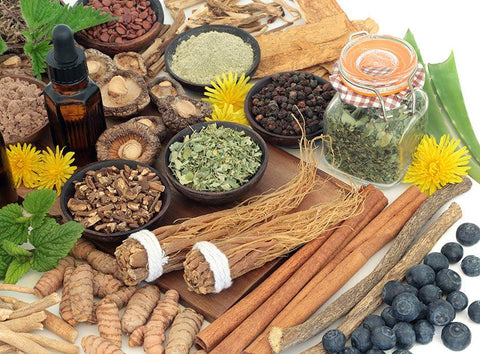
Several plants, adaptogenic mushrooms, adaptogenic drinks, tea and dietary supplements can help you. Each product helps you, but among these options, we recommend the products of the Actimar company!
These products are made from seawater, an incredible resource of minerals, electrolytes and trace elements. They provide in a balanced and assimilable way the entire spectrum of minerals you need to maintain good health. These supplements help the body's functions.6, 7
The role of minerals
- Metabolism of fats, proteins and carbohydrates
- Building bones, teeth and connective tissues
- Regulation of the heart and muscle contraction
- Maintenance of cellular integrity and the immune system
- Regulation of the nervous system1, 6, 7
The role of adaptogenic plants
Adaptogenic plants are known to support the body and mind during periods of stress. “Adaptogens” tone and regulate the functioning of the adrenal glands which are called upon during a period of stress.10
Thus, as mentioned above, the adrenal glands release cortisol, the main stress hormone, for several hours and regulate many processes, including digestion, the immune system, mood and emotions, energy storage and expenditure, etc. Over a long period, fatigue sets in and leads to exhaustion.1
It was a Russian toxicologist named Nicolaï Lazarev who, in 1947, attributed the concept of the adaptogenic plant. He attempted to define the mode of action of ginseng: an adaptogenic substance which generally non-specifically increases the body's resistance to the various stresses which affect it.12
Did you know that adaptogenic herbs have been used around the world for thousands of years in many traditions and shared by modern day herbalists. The advantage of these is that they are safe to consume on a daily and long-term basis, with very few side effects.14
Rhodiaplex to overcome stress

Rhodiaplex is a complex in which we find magnesium (sea water), red ginseng, Siberian ginseng and Rhodiola. Let's find out how these medicinal plants can contribute to your health!
Magnesium
This mineral is our number 1 anti-stress. It is essential for maintaining nervous and psychological balance, and for any fatigue that sets in. Stress drains us of our sources of magnesium. The more stressed we are, the more we eliminate our magnesium through our urine. This is why it is essential to take a magnesium supplement.1
Red ginseng
It is nicknamed "root of life" because of its many virtues and benefits. It is also one of the popular so-called adaptogenic plants. Different from American ginseng, it is mainly used as a natural tonic to combat physical, mental and intellectual fatigue. It has been used in Chinese medicine for millennia. It is called an “adaptogenic plant” because it has the ability to increase resistance to all forms of stress.2
Siberian ginseng
Siberian ginseng, also called eleutherococcus, is a plant that is considered adaptogenic and is traditionally used to tone the body and fight fatigue by supporting the adrenal glands. It helps improve physical and intellectual performance, support the immune system (acts as an antiviral), help concentration and provide general well-being. It is recommended, among others, for athletes, adolescents, students, convalescents, the elderly, etc.2
Adaptogenic plant: Rhodiola
Like Siberian ginseng, rhodiola root is an adaptogenic plant that quickly restores energy, increases concentration and helps with memory. This plant is found in temperate regions, notably in the Arctic, in certain European mountains but also on the American and Asian continents. Its virtues arise directly from its numerous active ingredients: rosavin, salidroside, rhodioloside, flavonoids and phytosterols. Organic rhodiola root is also available. It is appreciated for helping to overcome mood during emotional stress.1, 2, 11
Paradoxically today, our lives are often devoid of real dangers but our stress remains high. And this stress that invades us is chronic.1, 13, 14
Actimar Rhodiaplex lets you benefit from all the benefits of sea water and adaptogenic plants. Finding your energy transforms your life!
Other popular plant
Indian Ginseng or ashwagandha
Indian Ginseng, or Ashwagandha, is an adaptogenic herb known for its stress-reducing and vitality-enhancing properties. It helps balance the body, promoting resistance to tension and supporting mental and physical health.
About the author
Marie Couture, Qualified Naturopath
Specialized in:
- Digestive disorders
- Inflammation
- Hormonal problems
- Stress management
References:
- Liesse Véronique, Lefief-Delcourt Alix, The “Special Immunity” diet, Leduc Éditions, 2020, 297 pages.
- Vastel Anne, Chagnon Sylvie, Traditional Chinese Medicine Plants Western Medicines, Guy Trédaniel, 2020, 2022, 2023, 512 pages
- https://www.brunet.ca/sante/conseils-sante/le-stress-un-enjeu-de-societe/
- https://www.mieux-etre.org/Le-stress-encore-toujours-et-de-plus-en-plus.html
- https://medfam.umontreal.ca/wp-content/uploads/sites/16/Guide-autosoins-pour-la-gestion-du-stress.pdf
- https://www.louis-herboristerie.com/blog/eau-de-quinton-n218
- https://sante.journaldesfemmes.fr/fiches-sante-du-quotidien/2746027-eau-de-quinton-hypertonique-isotonique-definition-bienfaits-arthrose-contre-indication/
- https://infusemagazine.ca/aromatherapie-vitalite-huiles-essentielles-cocktail-lete/
- https://www.noovomoi.ca/vivre/bien-etre/article.10-trucs-pour-eviter-fatigue.1.1395939.html
- https://fr.wikipedia.org/wiki/Adaptog%C3%A8ne
Products Recommended in This Article

Rhodiaplex
- 39.99$
- 39.99$
- Price per unit
- by
-
30 ampoules