


Do-it-yourself fermented foods
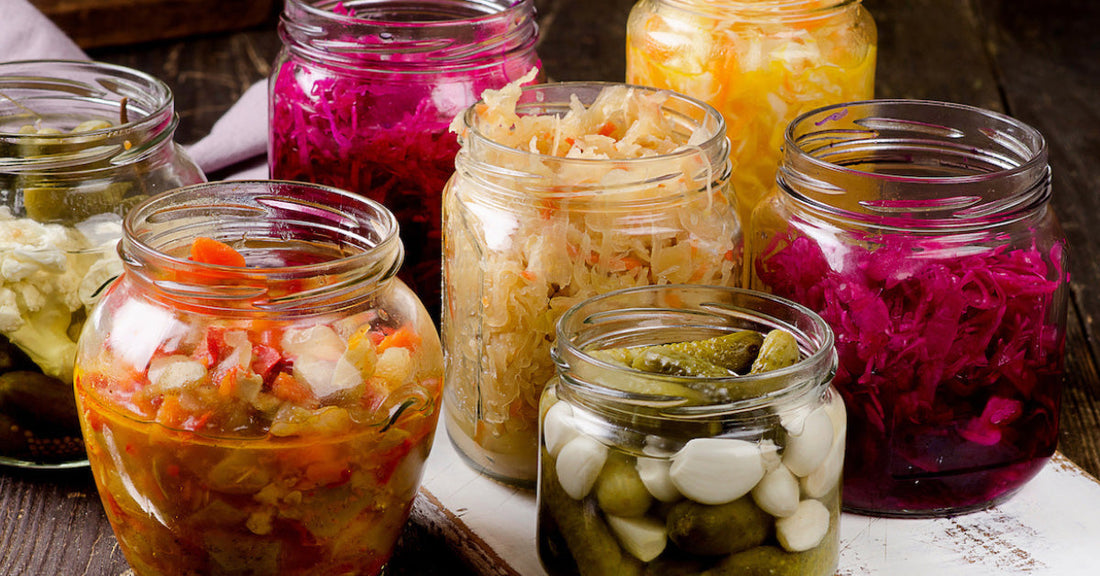
Although fermented foods have gradually disappeared over time, they are making a comeback and many people want to make them at home.
Discover the many benefits of fermented foods, as well as the basics of fermentation.
Fermented foods are health foods
Fermented foods are excellent for your health. During the fermentation process, the microorganisms (bacteria, yeasts and enzymes) that are created alter the food so as to form compounds with numerous properties.
Regular consumption of fermented foods allows you to:
- Reduce systemic inflammation linked to chronic and degenerative diseases, including heart disorders, cancer, obesity and metabolic syndrome1 ;
- Reduce high blood pressure1 ;
- Prevent the formation of thrombosis (anticoagulant action)1 ;
- Reduce bad cholesterol1 ;
- Prevent type 2 diabetes (through insulin secretion)1 ;
- Promote a good intestinal mucosa (preventing the formation of ulcers and inflammation)1 ;
- Support bone health and density1 ;
- Protect cells against free radicals and mutations (causes of cancer) 1 ;
- Reduce the spread of cancer cells1 ;
- Slow down aging1 ;
- Improve stress tolerance1 ;
- Improve the quality of sleep (rich in melatonin)1 ;
- Limit food cravings1
DIY fermented foods
With a little willpower, you can prepare fermented foods in your own kitchen. To make your life easier, you can get the kombucha jar or the fermentation jar. Here are our suggestions:
Sauerkraut
Sauerkraut is a condiment made from the fermentation of cabbage that goes well with meats and salads. It is the most widespread fermented product worldwide.
Green cabbage is most often used. It is finely chopped, mixed with salt and placed in a glass jar. The bacteria necessary for fermentation are already present in the cabbage so the process takes place naturally.
Sauerkraut is usually ready within a week of preparation.
Kimchi
Kimchi is a hotter variation of sauerkraut.
Most often, Chinese cabbage is used which is mixed with other vegetables, including carrots and turnips. Everything is seasoned with hot pepper, ginger, salt, and garlic. Just like sauerkraut, kimchi ferments in pots for about a week. It is delicious as an accompaniment to any main dish.
Kombucha
Kombucha is a slightly sweet effervescent beverage produced from the fermentation of sweet tea using bacteria and yeast. In order to allow the fermentation of the tea to take place, it is essential to have on hand a starting culture in the shape of a gelatinous disc commonly called mother kombucha or kombucha. SCOBY (symbiotic colony of bacteria and yeast). This culture is available in all branches of La Boite à Grains.
Preparing kombucha is simple to make and the final product is ready within 7 to 14 days following the start of fermentation.
Follow our kombucha making guide!
Kefir
Kefir is a subtly carbonated drink with a tangy taste resulting from the fermentation of milk.
Milk fermentation requires kefir grains, small whitish balls that look like cauliflower florets. It only takes three days of fermentation for the kefir to be ready. It drinks like liquid yogurt and provides several strains of probiotics. Kefir improves lactose digestion2. Its nutrients (proteins, vitamins and minerals) are more assimilable than those from milk3.
Kefir water
Kefir water is a sparkling dairy-free probiotic drink that is lightly sweetened. Water fermentation requires fruit as well as water kefir grains, available in stores. These look like small translucent crystals and are full of beneficial bacterial cultures. Just like dairy kefir, kefir water is ready in less than three days and its grains are reusable.
Sourdough
A faithful ally of the baker, sourdough is easily prepared at home provided you have flour and non-chlorinated water on hand. Floured water forms leaven thanks to natural yeasts and bacteria. This process takes 7 to 10 days depending on ambient conditions.
Sourdough bread is more digestible than yeast bread and its minerals are more assimilable. Some people who are gluten intolerant can eat sourdough bread without problem, even if the flour used contains gluten.4.
Sourdough also gives its finished products better preservation. In fact, sourdough bread can easily be stored for a week at room temperature without drying out.
Beet kvass
Kvass is a beverage similar to Kombucha with multiple variations. Coming from Russia, kvass is the result of the fermentation of beets placed in lightly salted water. In order to activate fermentation, sauerkraut juice or other fermentation is necessary since beetroot does not contain the necessary organisms on its own.
Kvass ferments quickly. The beverage is usually ready in two days and the beets can be reused many times.
Dare to explore!
Fermentation requires willpower and patience.
You can also get the benefits of fermented foods without the hassle of preparing them by purchasing products from Living Alchemy in our stores or our online store. Living Alchemy uses a unique kefir-kombucha fermentation, combining 35 strains of live microorganisms to transform a selective blend of certified organic foods and plants into a living matrix of bio-activated nutrients, enzymes and beneficial flora.
About the author
Naturopaths from La Boite à Grains
Team of qualified and certified naturopaths (ND) in Gatineau in Outaouais.
Original article written by Véronique Cousineau, Naturopath
Sources
1: Fermented foods in health and disease prevention. Juana Frias - Cristina Martinez-Villaluenga - Elena Peñas - Elsevier Academic press – 2017
2: S. Hertzler, S. Clancy Kefir improves lactose digestion and tolerance in adults with lactose maldigestion; Journal of the American Dietetic Association, Volume 103, Issue 5, Pages 582-587
3: Festy, Danièle: Probiotics are magic, Leduc.s editions
4: Biesiekierski JR, “No effects of gluten in patients with self-reported non-celiac gluten sensitivity after dietary reduction of fermentable, poorly absorbed, short-chain carbohydrates. », Gastroenterology, no 320-8, August 2014
Products Recommended in This Article

Kombucha jar
- 11.99$
- 11.99$
- Price per unit
- by


Large Glass Fermentation Jar
- From 28.99$
- From 28.99$
- Price per unit
- by
-
One (with bubbler)
-
One (without bubbler)